.png)
MudNMixtures: An Artist and Therapist, Her Path to Creation, and How She Mentally Sustains
BY: HANNAH SIMON
Published: 11.29.25
Read time: 10-15min

Featured: Manny L. in Promotional Photoshoot
Music. We all know it, we all love it. It’s woven into every part of our lives. But like many, we’ve often wondered, how do you get started and actually break into music? How do you get your sound heard? Where do you find your creativity? We see the acts, the glitz, the spotlight. But when the stage comes down, the lights go out, and the crowd clears - who’s behind the sound? Rarely do we get a peek into the process and the how behind those who lay the foundation for the music that moves us.
That part often stays a mystery.
We sat down with one of Philadelphia’s finest rising producers, Manny Laurenko, to pull back the curtain. From making beats on desks to earning production credits on projects with PNBRock, A$AP Ferg, and Kanye West, Manny’s journey is as raw as it is inspiring. This is how he found his sound, maintains his creativity and started building a legacy of his own.
We met with Manny on a gray, rain-soaked spring afternoon, the kind of day that might’ve prompted a reschedule. But he arrived, unbothered by the weather, carrying a quiet confidence and a calm presence. There was no need for small talk. He took his seat, ready to share his story, and we were ready to dig in.
So, how did you get your start in music?
M: I fell in love with music as a kid, just growing up around it. My older siblings played a big role in that - I’m the youngest, so I was always listening to whatever they had on. It wasn’t music I would’ve chosen myself at the time, but I developed a real appreciation for it. “Eventually, that led me to start finding music on my own and exploring genres that felt more like me. What really hooked me were the gimmicks a lot of artists had back then, it reminded me of wrestling. The characters, the stories, the visuals, it all felt bigger than life and pulled me in completely.
Who were some of the artists you fell in love with via your siblings?
M: Lil Wayne, DMX & rough riders, Luda Chris, Chingy and other down south artists; CC Waynans, Kirk Franklin, Micheal Jackson, Whitney Houston - I love Whitney Houston. Shout out to my mom, she shaped a lot of my music choices too.

Southern rap and Ruff Ryders and Whitney Houston - they all bring such distinct energies how have they influenced your sound? What specific elements did you take from each that still show up in how you create music today?
Manny L. and his Mother (Marilyn) 1998
M: It was the unorthodox style - on both ends. Like wrestling, each artist had their own character, their own vibe, and that made them stand out. I was drawn to the flows and all the little sound effects you could catch tucked into the beats. It was those moments in a song that make you stop and say, ‘Damn, that was crazy’ — the details that make you fall in love with it.
M: I was a kid, so I wasn’t really interested until high school. I always used to make beats, but it started out as me just drumming on desks before I actually learned how to make music. My first real beat was definitely in high school, but knowing me, I probably didn’t like it because it felt hard. Back then it was mostly me just playing around with my friends, rapping and not taking it too seriously. That didn’t really shift until college. I ended up dropping out—I was studying forensic science—and that’s when I started leaning into music full-time.
Once you officially started making music - what was your first big track?
M: Spaceboy, for sure. Before that, me and my boy Tsan dropped an EP called Farewell, and that really built a lot of momentum for me. I always knew I could do this—I just wasn’t sure how far I wanted to take it.
Did music start off as more of a hobby that transformed into a career? Or was that always your goal?
M: Once I knew I wanted to do music in college, it stopped being just a hobby—but it also wasn’t like, “okay, I need to be the best at this.” It felt more like playing a video game to me. I wanted to get good at it and do well, and that’s what made it fun. To this day, I still see it the same way—I do music for fun, not for the money. It’s never been about that. Honestly, I’ve spent way more investing in my music than I’ve ever made from it. In the beginning, I had to buy software, hardware, plugins—everything just to make beats. I even took piano classes in 2023 so I could understand music better. It was boring, but now I can read music, and that was the whole reason I pushed through it.
I don't think I needed though...I don't believe in music theory or that a certain key makes a hit. All the music I make is in C major. I guess it's my accidental signature.

Featured: Manny L. and Friend
When learning how to produce, did anyone teach you?
M: Nah, I’m a self-taught producer. I don’t believe there’s a right or wrong way to make music—everyone has their own thing that works for them. With synthesizers, I got good because I was messing up, playing them the way they weren’t “supposed” to be played, but sonically it stood out. I like throwing weird sounds and instruments together, colliding them all in one—and that’s not something you can really be taught.
Your full body projects, is there usually a collective story your building or is each song within it's own universe?
M: Each song definitely lives in it's own universe, but like with my last project I wanted all the listeners to leave with something. So that was the larger theme, like with each song what are they getting out of this? Each track was different but the point of all of it was for listeners to leave with something tangible overall and that was the story.
What has been the most difficult part of your journey?
M: I'm independent, so I have a lot of freedom—and honestly, fewer problems because of that. The only issue I run into sometimes is getting music cleared by a label or an artist. But if something doesn’t work out, I just pivot. I have to keep going regardless.
Are there any negatives being an independent artist?
M: Yeah, when you don’t have a machine behind you, you’ve got to work twenty times harder and be your own machine. But I don’t really see that as an issue, because I enjoy the freedom and I feel like it builds character. So before I even get to that level, I already know how to navigate and network for myself—I’ll never have to rely on a machine to make things happen.
.png)
Featured: Manny L. in Promotional Photoshoot
What was your first time in the studio like?
M: To reach true growth and potential, you have to aspire to be a better person—a better individual—so that anything you touch or come across benefits from that. Second, I’d say have faith and believe in yourself and your vision…well, first find the vision, then commit to it. You can’t take someone else’s vision and try to apply it directly to your own path.
What are one or two tips you'd give to an aspiring producer or artist to help them along in their journey?
In the midst of all this, how do you stay encouraged and keep your head up?
M: I pray—I always pray. I pray daily. There are a lot of days when I’m down, but I remind myself: I really became who I wanted to be. I’m a producer. I have to keep going. You’re always just one step away from where you want to be. And I know I want to build more. Music is my entry point into so many other things—I want to build businesses, I love architecture, I want to build homes. Knowing there’s so much more ahead of me, so much more to look forward to—that’s what keeps me going.
In the midst of all this, how do you stay encouraged and keep your head up?
Manny Laurenko’s story is still unfolding, but what’s clear is his foundation: resilience, faith, and a love for creating sound that hits deeper than the surface. From drumming on desks to shaping tracks for some of hip-hop’s biggest names, he’s proof that raw talent paired with persistence can carve its own lane. Independence hasn’t just given him freedom—it’s given him character, vision, and a blueprint that goes beyond music.
The beats are only the starting point for Manny. Here’s the wisdom he leaves behind for every creative chasing their own vision:

When do you think you had your first real inkling that art was going to be one of those things you simply couldn’t give up in this life?
K: Honestly, I didn’t have that realization until I was older—when I got to college, that’s when it really clicked for me. I knew my creativity was a God-given gift, and it felt like it would be a complete waste if I didn’t do something with it. I started trying to figure out how to make my art something I genuinely enjoyed, while also making sure I could actually make a living from it—because, you know, the artist lifestyle can be real. The whole “starving artist” thing? I get it. I understand exactly what people mean by that.
But that’s really where my passion and drive to stay creative came from, and I’ve just been continuing to build on that—both the work itself and the lifestyle that comes with it.
Was there a professor, a class, or something specific that made you say, “I’m doing this because I love it”? Was there anyone who helped push that realization along?
K: Paul Chaleff—he’s a ceramicist, and he’s really where everything started for me. I practically lived in the ceramics studio for three years, working as a studio aide and eventually stepping into what was essentially an apprenticeship around my junior or early senior year.
Paul taught me almost everything I know about ceramics, especially glaze chemistry. We had a full glaze lab, so I spent hours mixing chemicals, weighing materials, and learning how glazes come to life. He guided me through all of it, and he became a true mentor—someone I deeply admire.
I’ll never forget visiting his home. It used to be a farmhouse, and he turned it into this beautiful space with a studio and showroom. I was sitting by a huge picture window overlooking a wide field in his backyard, and I just thought, "This is the life I want,". He came over, asked if I was okay, and I told him exactly what I was thinking. He looked at me and said, “This very well could be your life.”
That moment stayed with me. It pushed me to take my work seriously and commit to bringing that kind of creative life into reality.
A
rt keeps us moving. It shapes how we see the world, and it keeps us asking the same question generation after generation: are we reflecting life, or rewriting it? To build a creative life, you need range—a willingness to learn, to stretch, to get uncomfortable.
That range is what keeps your work honest, keeps it connected to the world inside you. But every artist faces the same crossroads: finding your spark, choosing a medium, or realizing you don’t need to choose at all. Real artistry comes from three things: vulnerability, discipline, and the courage to reinvent. That’s where the story really starts.

To be a creative is to build worlds. To be an artist is to become the vessel through which dreams and ideas take shape.
The question many of us ask is how? Are artists born, or are they made? We believe it’s a bit of both. Art requires a willingness to be vulnerable—an openness to placing your inner world on display. Sharing your mind outside of your body is no small feat. To be an artist is to release the fear of judgment and step fully into expression. There’s something divine about getting others to recognize themselves in your work—about touching people without ever speaking a word.
We sat down with one of our favorite artists, Kiarra Williams, to explore that journey. From praying to be featured in an art show to exhibiting in New York City galleries and selling pieces to business owners, Kiarra has carved a path rooted in discovery, discipline, and faith. As both an artist and an art therapist, she creates not only to make something beautiful, but to center her spirit, her mind, and her purpose through her practice. This is her story of becoming.
When do you think you had your first real inkling that art was going to be one of those things you simply couldn’t give up in this life?
K: Honestly, I didn’t have that realization until I was older—when I got to college, that’s when it really clicked for me. I knew my creativity was a God-given gift, and it felt like it would be a complete waste if I didn’t do something with it. I started trying to figure out how to make my art something I genuinely enjoyed, while also making sure I could actually make a living from it—because, you know, the artist lifestyle can be real. The whole “starving artist” thing? I get it. I understand exactly what people mean by that.
But that’s really where my passion and drive to stay creative came from, and I’ve just been continuing to build on that—both the work itself and the lifestyle that comes with it.
Was there a professor, a class, or something specific that made you say, “I’m doing this because I love it”? Was there anyone who helped push that realization along?
K: Paul Chaleff—he’s a ceramicist, and he’s really where everything started for me. I practically lived in the ceramics studio for three years, working as a studio aide and eventually stepping into what was essentially an apprenticeship around my junior or early senior year.
Paul taught me almost everything I know about ceramics, especially glaze chemistry. We had a full glaze lab, so I spent hours mixing chemicals, weighing materials, and learning how glazes come to life. He guided me through all of it, and he became a true mentor—someone I deeply admire.
I’ll never forget visiting his home. It used to be a farmhouse, and he turned it into this beautiful space with a studio and showroom. I was sitting by a huge picture window overlooking a wide field in his backyard, and I just thought, "This is the life I want,". He came over, asked if I was okay, and I told him exactly what I was thinking. He looked at me and said, “This very well could be your life.”
That moment stayed with me. It pushed me to take my work seriously and commit to bringing that kind of creative life into reality.
K: Paul Chaleff—he’s a ceramicist, and he’s really where everything started for me. I practically lived in the ceramics studio for three years, working as a studio aide and eventually stepping into what was essentially an apprenticeship around my junior or early senior year.
Paul taught me almost everything I know about ceramics, especially glaze chemistry. We had a full glaze lab, so I spent hours mixing chemicals, weighing materials, and learning how glazes come to life. He guided me through all of it, and he became a true mentor—someone I deeply admire.
I’ll never forget visiting his home. It used to be a farmhouse, and he turned it into this beautiful space with a studio and showroom. I was sitting by a huge picture window overlooking a wide field in his backyard, and I just thought, "This is the life I want,". He came over, asked if I was okay, and I told him exactly what I was thinking. He looked at me and said, “This very well could be your life.”
That moment stayed with me. It pushed me to take my work seriously and commit to bringing that kind of creative life into reality.
Was there a professor, a class, or something specific that made you say, “I’m doing this because I love it”? Was there anyone who helped push that realization along?
K: Honestly, I didn’t have that realization until I was older—when I got to college, that’s when it really clicked for me. I knew my creativity was a God-given gift, and it felt like it would be a complete waste if I didn’t do something with it. I started trying to figure out how to make my art something I genuinely enjoyed, while also making sure I could actually make a living from it—because, you know, the artist lifestyle can be real. The whole “starving artist” thing? I get it. I understand exactly what people mean by that.
But that’s really where my passion and drive to stay creative came from, and I’ve just been continuing to build on that—both the work itself and the lifestyle that comes with it.
When do you think you had your first real inkling that art was going to be one of those things you simply couldn’t give up in this life?
When do you think you had your first real inkling that art was going to be one of those things you simply couldn’t give up in this life?
K: Honestly, I didn’t have that realization until I was older—when I got to college, that’s when it really clicked for me. I knew my creativity was a God-given gift, and it felt like it would be a complete waste if I didn’t do something with it. I started trying to figure out how to make my art something I genuinely enjoyed, while also making sure I could actually make a living from it—because, you know, the artist lifestyle can be real. The whole “starving artist” thing? I get it. I understand exactly what people mean by that.
But that’s really where my passion and drive to stay creative came from, and I’ve just been continuing to build on that—both the work itself and the lifestyle that comes with it.
Was there a professor, a class, or something specific that made you say, “I’m doing this because I love it”? Was there anyone who helped push that realization along?
K: Paul Chaleff—he’s a ceramicist, and he’s really where everything started for me. I practically lived in the ceramics studio for three years, working as a studio aide and eventually stepping into what was essentially an apprenticeship around my junior or early senior year.
Paul taught me almost everything I know about ceramics, especially glaze chemistry. We had a full glaze lab, so I spent hours mixing chemicals, weighing materials, and learning how glazes come to life. He guided me through all of it, and he became a true mentor—someone I deeply admire.
I’ll never forget visiting his home. It used to be a farmhouse, and he turned it into this beautiful space with a studio and showroom. I was sitting by a huge picture window overlooking a wide field in his backyard, and I just thought, "This is the life I want,". He came over, asked if I was okay, and I told him exactly what I was thinking. He looked at me and said, “This very well could be your life.”
That moment stayed with me. It pushed me to take my work seriously and commit to bringing that kind of creative life into reality.
K: Paul Chaleff—he’s a ceramicist, and he’s really where everything started for me. I practically lived in the ceramics studio for three years, working as a studio aide and eventually stepping into what was essentially an apprenticeship around my junior or early senior year.
Paul taught me almost everything I know about ceramics, especially glaze chemistry. We had a full glaze lab, so I spent hours mixing chemicals, weighing materials, and learning how glazes come to life. He guided me through all of it, and he became a true mentor—someone I deeply admire.
I’ll never forget visiting his home. It used to be a farmhouse, and he turned it into this beautiful space with a studio and showroom. I was sitting by a huge picture window overlooking a wide field in his backyard, and I just thought, "This is the life I want,". He came over, asked if I was okay, and I told him exactly what I was thinking. He looked at me and said, “This very well could be your life.”
That moment stayed with me. It pushed me to take my work seriously and commit to bringing that kind of creative life into reality.
Was there a professor, a class, or something specific that made you say, “I’m doing this because I love it”? Was there anyone who helped push that realization along?
K: Honestly, I didn’t have that realization until I was older—when I got to college, that’s when it really clicked for me. I knew my creativity was a God-given gift, and it felt like it would be a complete waste if I didn’t do something with it. I started trying to figure out how to make my art something I genuinely enjoyed, while also making sure I could actually make a living from it—because, you know, the artist lifestyle can be real. The whole “starving artist” thing? I get it. I understand exactly what people mean by that.
But that’s really where my passion and drive to stay creative came from, and I’ve just been continuing to build on that—both the work itself and the lifestyle that comes with it.
When do you think you had your first real inkling that art was going to be one of those things you simply couldn’t give up in this life?
K: Paul Chaleff—he’s a ceramicist, and he’s really where everything started for me. I practically lived in the ceramics studio for three years, working as a studio aide and eventually stepping into what was essentially an apprenticeship around my junior or early senior year.
Paul taught me almost everything I know about ceramics, especially glaze chemistry. We had a full glaze lab, so I spent hours mixing chemicals, weighing materials, and learning how glazes come to life. He guided me through all of it, and he became a true mentor—someone I deeply admire.
I’ll never forget visiting his home. It used to be a farmhouse, and he turned it into this beautiful space with a studio and showroom. I was sitting by a huge picture window overlooking a wide field in his backyard, and I just thought, "This is the life I want,". He came over, asked if I was okay, and I told him exactly what I was thinking. He looked at me and said, “This very well could be your life.”
That moment stayed with me. It pushed me to take my work seriously and commit to bringing that kind of creative life into reality.
Was there a professor, a class, or something specific that made you say, “I’m doing this because I love it”? Was there anyone who helped push that realization along?
K: Honestly, I didn’t have that realization until I was older—when I got to college, that’s when it really clicked for me. I knew my creativity was a God-given gift, and it felt like it would be a complete waste if I didn’t do something with it. I started trying to figure out how to make my art something I genuinely enjoyed, while also making sure I could actually make a living from it—because, you know, the artist lifestyle can be real. The whole “starving artist” thing? I get it. I understand exactly what people mean by that.
But that’s really where my passion and drive to stay creative came from, and I’ve just been continuing to build on that—both the work itself and the lifestyle that comes with it.
When do you think you had your first real inkling that art was going to be one of those things you simply couldn’t give up in this life?
K: Paul Chaleff—he’s a ceramicist, and he’s really where everything started for me. I practically lived in the ceramics studio for three years, working as a studio aide and eventually stepping into what was essentially an apprenticeship around my junior or early senior year.
Paul taught me almost everything I know about ceramics, especially glaze chemistry. We had a full glaze lab, so I spent hours mixing chemicals, weighing materials, and learning how glazes come to life. He guided me through all of it, and he became a true mentor—someone I deeply admire.
I’ll never forget visiting his home. It used to be a farmhouse, and he turned it into this beautiful space with a studio and showroom. I was sitting by a huge picture window overlooking a wide field in his backyard, and I just thought, "This is the life I want,". He came over, asked if I was okay, and I told him exactly what I was thinking. He looked at me and said, “This very well could be your life.”
That moment stayed with me. It pushed me to take my work seriously and commit to bringing that kind of creative life into reality.
Was there a professor, a class, or something specific that made you say, “I’m doing this because I love it”? Was there anyone who helped push that realization along?
K: Honestly, I didn’t have that realization until I was older—when I got to college, that’s when it really clicked for me. I knew my creativity was a God-given gift, and it felt like it would be a complete waste if I didn’t do something with it. I started trying to figure out how to make my art something I genuinely enjoyed, while also making sure I could actually make a living from it—because, you know, the artist lifestyle can be real. The whole “starving artist” thing? I get it. I understand exactly what people mean by that.
But that’s really where my passion and drive to stay creative came from, and I’ve just been continuing to build on that—both the work itself and the lifestyle that comes with it.
When do you think you had your first real inkling that art was going to be one of those things you simply couldn’t give up in this life?
Let's go further back. In high school (shout out to Penn Wood), what was one of the sparks of inspiration from that period that carried you into college—was it ceramics?
K: It all started with ceramics. I actually never took a drawing class—ceramics was the thing that hooked me early on, and that happened back in high school. I first took it with Ms. Lord, and when she went on sabbatical we had Ms. Nail. During that time, I did the ceramics studio internship for two semesters—well, quarters technically, it’s been a minute since I’ve had to remember that.
That’s where I was first introduced to wheel throwing. I would sit at the wheel for days, literally just practicing how to center clay. I wasn’t focused on making anything yet—I just wanted to learn the technique, to understand the process. So I’d sit there over and over, trying to get it right.
It became an escape for me. Something really calming and grounding. I think that’s where my love and appreciation for ceramics really took root, and that’s what eventually led me to take it to the next level in college.

Piece by Kiara Williams
Given how meaningful that initial act of centering clay was for you, how has that trait carried over into the way you move through the creative industry today—whether it’s putting on shows, selling your art, or developing your career?
K: I’d say I’m still in the early stages and learning as I go. I’ve been navigating most of this on my own. My former professor is in New York, and while we still check in, I try not to lean too heavily—I never want to feel like I’m intruding on someone’s time.
I stay plugged in with other artists, though. My good friend Nazeer Sabree—who’s really making waves in Philly’s art scene—has been someone I talk to often about what it takes to elevate your work. Those conversations help me understand the steps, the mindset, the process.
Right now, my focus is on absorbing everything I can and staying consistent. Consistency is key in art—but so are breaks. A lot of my friends are business-minded, and they’ll offer advice about treating art like a business. I appreciate it, and it helps with networking, but creativity moves differently. You don’t want it to become just about money. Art is personal and emotional, and the connection matters.
There’s marketing involved, of course—you’re sharing your work and drawing people in—but it’s a softer, more intentional kind of outreach. So that’s where I am: learning, refining, and honoring the creative side just as much as the practical one.

K: For me, boundaries are really important. I’ve learned to filter what actually benefits me and my art instead of letting every piece of advice dictate what I should be doing. When I try to take on too many opinions, it becomes a distraction, and I stop being productive because I’m pulled in a hundred different directions.
I also lean on prayer a lot—just asking for clarity about what’s truly for me and what isn’t. It helps me discern what will keep me aligned versus what might knock me off course.
And honestly, commissions are a big part of that. I don’t love doing them. They pull me into this mindset where I’m focused on being perfect and imagining how the client will judge every detail, when most of the time, the person commissioning the piece couldn’t create what I’m making anyway. It shifts the energy, and that’s something I protect.
Creatives never feel things are “done.” How do you tell yourself “stop, it’s enough”?
K: Honestly, I don’t struggle with that too much. I usually know when something is “good enough,” and I try not to overwork pieces—simplicity tends to be best for me. Especially with commissions, I’m very clear on what the piece is going to be, and once it’s done, it’s done. I don’t let myself spiral, because the goal is to finish it and move on.
But when it comes to work I’m passionate about—pieces I’m making for myself—that’s a completely different process. I spend a lot of time thinking through the idea before I even touch the paper. I’ll write things down, sketch mentally, and really envision the piece in my head until I can see it clearly. Once I start creating, if it shifts or evolves, I let it. Flexibility and the willingness to pivot are huge parts of my process. It keeps the work honest.
Speaking of pivoting—when did you know you had to pivot toward art therapy as a career path?
K: My mom actually introduced me to art therapy in college—maybe junior or senior year. I didn’t know anything about it at the time; I just knew I wanted to combine art with a psychological element. I started out as a psychology major, but once statistics showed up, I switched paths and began researching art therapy seriously. It clicked immediately, and I knew I could take it somewhere.
That shift also influenced the kind of work I make now. I had to pivot into drawing and portraiture because ceramics isn’t as accessible outside of school—it’s expensive, and the process requires equipment I don’t have right now. Portraiture made sense; people connect with it, and color draws them in. And I knew I had the skill set to do it well.
This path allows me to build resources, fund my practice, and eventually circle back to ceramics—or combine the two. So that’s where I am artistically: focused on portraiture, and doing ceramics whenever I can until I’m able to return fully or merge both mediums.
How do the tools you've learned as an art therapist help you internally in your own creative process?

K: Honestly, I just did a bit of art therapy on myself yesterday. I needed to release something, and lately I’ve been a lot more emotional in my artwork. I didn’t always express myself that way in my drawings—ceramics used to be my escape. It’s meditative, sensory, grounding. Drawing feels different; it’s more direct because you’re putting something on paper and seeing it immediately.
So I’ve been pushing myself to be more vulnerable in my work, and it’s been a really beautiful process. It helps me, but I also hope it helps someone else who sees it and recognizes that openness.
One piece from my show, I Gave My Heart With Nothing in Return, used hundreds of cut-up journal entries—real entries from years of heartbreak, family things, everything. Incorporating that level of honesty put me in the same position I ask my clients to be in. As art therapists, we’re constantly asking others to be vulnerable, so it felt important to hold myself to that same standard and really experience the process from the inside.
What are one or two tangible tools or tips you’d share with other creatives to help them pull more out of themselves than they thought was possible?
K: I’d say lean into the things that make you uncomfortable—I've been trying to embrace fear more myself. Try something you’ve never done before, and do it for you, not for anyone else. Give yourself space to express and to release. Because art is emotional, you need a certain level of emotional awareness to create work that truly means something. It helps you understand yourself, your process, and how others might connect with what you make.
I also think it’s important to create art that’s just for you—work you don’t show to anyone. That private space keeps you grounded. It removes the pressure to be perfect and lets you process without performance.
And the other big thing is rest. Take pauses. In those pauses, fill your mind with things that keep you inspired—reading, research, museum visits, gallery walks. Those are all things I do myself. They help me stay creatively awake and keep me aligned with the kind of artistic life I’m building.

We’re constantly intaking as creatives. What are a few things you pull from life that consistently fuel your creative process?
K: I go to New York a lot—I just have a deep love for the city, and I visit friends there often. I also recharge by being in nature: hiking, kayaking, and spending time with my younger siblings really fills my cup.
Podcasts play a big role too. I listen to Wallo a lot—he’s incredibly inspirational. Church is another grounding part of my routine. And music is huge for me; it influences so much of how I move and what I create.
Those are the things I take in—the places, people, and practices that keep me inspired and connected.
The last thing—an artist note. One sentence (or more) for other artists to think about, dream about, or use as encouragement. Can you give that?
K: I actually had something on my mind this morning after listening to a friend speak on Instagram. He was talking about speaking life over himself—how words of affirmation are a love language for him. And it made me realize they’re a love language for me too, not just from other people but from myself. I need to practice that same care inward.
He mentioned looking in the mirror and affirming who he is right now, instead of only thinking about who he wants to become. That really resonated with me. Because you can’t enjoy the journey if you’re never present for the moments you’re living in.
Sometimes you have to remind yourself to live—even while you're striving. Staying present can be hard, especially when you want so badly to be somewhere else or further along. You can get lost in the drive. I have to remind myself of that constantly.
What’s unfolding in Kiara’s story is a commitment to art that goes far beyond the final piece. It’s the quiet discipline of showing up, the bravery of being vulnerable, and the faith required to stay present while striving. She’s building a life rooted in honesty—one where creativity becomes both sanctuary and compass. Interested in her art? Take a look at what's available for purchase here.
MudNMixtures: An Artist and Therapist, Her Path to Creation, and How She Mentally Sustains
BY: HANNAH SIMON
Published: 11.29.25
Read time: 10-15min
A
rt keeps us moving. It shapes how we see the world, and it keeps us asking the same question generation after generation: are we reflecting life, or rewriting it? To build a creative life, you need range—a willingness to learn, to stretch, to get uncomfortable. That range is what keeps your work

honest, keeps it connected to the world inside you. But every artist faces the same crossroads: finding your spark, choosing a medium, or realizing you don’t need to choose at all. Real artistry comes from three things: vulnerability, discipline, and the courage to reinvent. That’s where the story really starts.

To be a creative is to build worlds. To be an artist is to become the vessel through which dreams and ideas take shape.
The question many of us ask is how? Are artists born, or are they made? We believe it’s a bit of both. Art requires a willingness to be vulnerable—an openness to placing your inner world on display. Sharing your mind outside of your body is no small feat. To be an artist is to release the fear of judgment and step fully into expression. There’s something divine about getting others to recognize themselves in your work—about touching people without ever speaking a word.
We sat down with one of our favorite artists, Kiarra Williams, to explore that journey. From praying to be featured in an art show to exhibiting in New York City galleries and selling pieces to business owners, Kiarra has carved a path rooted in discovery, discipline, and faith. As both an artist and an art therapist, she creates not only to make something beautiful, but to center her spirit, her mind, and her purpose through her practice. This is her story of becoming.
When do you think you had your first real inkling that art was going to be one of those things you simply couldn’t give up in this life?
K: Honestly, I didn’t have that realization until I was older—when I got to college, that’s when it really clicked for me. I knew my creativity was a God-given gift, and it felt like it would be a complete waste if I didn’t do something with it. I started trying to figure out how to make my art something I genuinely enjoyed, while also making sure I could actually make a living from it—because, you know, the artist lifestyle can be real. The whole “starving artist” thing? I get it. I understand exactly what people mean by that.
But that’s really where my passion and drive to stay creative came from, and I’ve just been continuing to build on that—both the work itself and the lifestyle that comes with it.
Was there a professor, a class, or something specific that made you say, “I’m doing this because I love it”? Was there anyone who helped push that realization along?
K: Paul Chaleff—he’s a ceramicist, and he’s really where everything started for me. I practically lived in the ceramics studio for three years, working as a studio aide and eventually stepping into what was essentially an apprenticeship around my junior or early senior year.
Paul taught me almost everything I know about ceramics, especially glaze chemistry. We had a full glaze lab, so I spent hours mixing chemicals, weighing materials, and learning how glazes come to life. He guided me through all of it, and he became a true mentor—someone I deeply admire.
I’ll never forget visiting his home. It used to be a farmhouse, and he turned it into this beautiful space with a studio and showroom. I was sitting by a huge picture window overlooking a wide field in his backyard, and I just thought, "This is the life I want,". He came over, asked if I was okay, and I told him exactly what I was thinking. He looked at me and said, “This very well could be your life.”
That moment stayed with me. It pushed me to take my work seriously and commit to bringing that kind of creative life into reality.

Let's go further back. In high school (shout out to Penn Wood), what was one of the sparks of inspiration from that period that carried you into college—was it ceramics?
K: It all started with ceramics. I actually never took a drawing class—ceramics was the thing that hooked me early on, and that happened back in high school. I first took it with Ms. Lord, and when she went on sabbatical we had Ms. Nail. During that time, I did the ceramics studio internship for two semesters—well, quarters technically, it’s been a minute since I’ve had to remember that.
That’s where I was first introduced to wheel throwing. I would sit at the wheel for days, literally just practicing how to center clay. I wasn’t focused on making anything yet—I just wanted to learn the technique, to understand the process. So I’d sit there over and over, trying to get it right.
It became an escape for me. Something really calming and grounding. I think that’s where my love and appreciation for ceramics really took root, and that’s what eventually led me to take it to the next level in college.
Piece by Kiarra Williams
Given how meaningful that initial act of centering clay was for you, how has that trait carried over into the way you move through the creative industry today—whether it’s putting on shows, selling your art, or developing your career?
Piece by Kiara Williams
K: I’d say I’m still in the early stages and learning as I go. I’ve been navigating most of this on my own. My former professor is in New York, and while we still check in, I try not to lean too heavily—I never want to feel like I’m intruding on someone’s time.
I stay plugged in with other artists, though. My good friend Nazeer Sabree—who’s really making waves in Philly’s art scene—has been someone I talk to often about what it takes to elevate your work. Those conversations help me understand the steps, the mindset, the process.
Right now, my focus is on absorbing everything I can and staying consistent. Consistency is key in art—but so are breaks. A lot of my friends are business-minded, and they’ll offer advice about treating art like a business. I appreciate it, and it helps with networking, but creativity moves differently. You don’t want it to become just about money. Art is personal and emotional, and the connection matters.
There’s marketing involved, of course—you’re sharing your work and drawing people in—but it’s a softer, more intentional kind of outreach. So that’s where I am: learning, refining, and honoring the creative side just as much as the practical one.
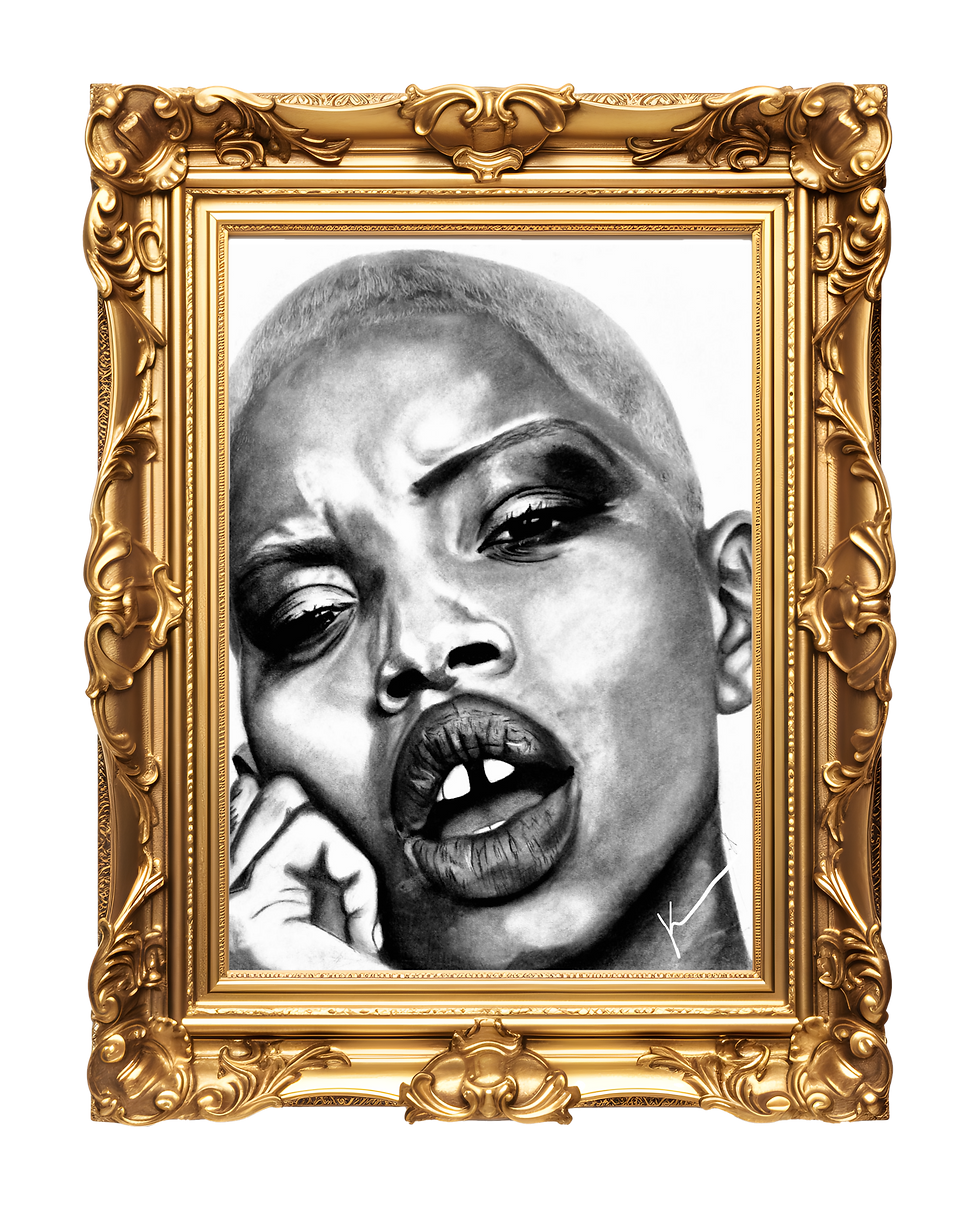
With peers giving business advice and commissions adding pressure, how do you keep your focus on creativity despite the noise or the days when you don’t feel like being creative?
K: For me, boundaries are really important. I’ve learned to filter what actually benefits me and my art instead of letting every piece of advice dictate what I should be doing. When I try to take on too many opinions, it becomes a distraction, and I stop being productive because I’m pulled in a hundred different directions.
I also lean on prayer a lot—just asking for clarity about what’s truly for me and what isn’t. It helps me discern what will keep me aligned versus what might knock me off course.
And honestly, commissions are a big part of that. I don’t love doing them. They pull me into this mindset where I’m focused on being perfect and imagining how the client will judge every detail, when most of the time, the person commissioning the piece couldn’t create what I’m making anyway. It shifts the energy, and that’s something I protect.
Creatives never feel things are “done.” How do you tell yourself “stop, it’s enough”?
K: Honestly, I don’t struggle with that too much. I usually know when something is “good enough,” and I try not to overwork pieces—simplicity tends to be best for me. Especially with commissions, I’m very clear on what the piece is going to be, and once it’s done, it’s done. I don’t let myself spiral, because the goal is to finish it and move on.
But when it comes to work I’m passionate about—pieces I’m making for myself—that’s a completely different process. I spend a lot of time thinking through the idea before I even touch the paper. I’ll write things down, sketch mentally, and really envision the piece in my head until I can see it clearly. Once I start creating, if it shifts or evolves, I let it. Flexibility and the willingness to pivot are huge parts of my process. It keeps the work honest.
Speaking of pivoting—when did you know you had to pivot toward art therapy as a career path?
K: My mom actually introduced me to art therapy in college—maybe junior or senior year. I didn’t know anything about it at the time; I just knew I wanted to combine art with a psychological element. I started out as a psychology major, but once statistics showed up, I switched paths and began researching art therapy seriously. It clicked immediately, and I knew I could take it somewhere.
That shift also influenced the kind of work I make now. I had to pivot into drawing and portraiture because ceramics isn’t as accessible outside of school—it’s expensive, and the process requires equipment I don’t have right now. Portraiture made sense; people connect with it, and color draws them in. And I knew I had the skill set to do it well.
This path allows me to build resources, fund my practice, and eventually circle back to ceramics—or combine the two. So that’s where I am artistically: focused on portraiture, and doing ceramics whenever I can until I’m able to return fully or merge both mediums.
As an art therapist, how does your empathy as a creative aid your clients in their healing processes?

K: Art therapy is delicate because you’re asking people to be vulnerable, but in a way that doesn’t require them to speak before they’re ready. That’s what I love about it—people can express what they’re feeling through the art itself. There’s a misconception that you have to be an artist, but it’s never about the final product. It’s about the process.
What keeps me steady in that work is my care for people and a lot of patience. And the dynamics are so different depending on the setting. Individual sessions take time and go deep; group sessions create this shared energy where people open up together. It’s beautiful to see how art can connect and even heal people—not because the therapist has all the answers, but because everyone is supporting each other in the same space.
Piece by Kiarra Williams
How do the tools you've learned as an art therapist help you internally in your own creative process?
K: Honestly, I just did a bit of art therapy on myself yesterday. I needed to release something, and lately I’ve been a lot more emotional in my artwork. I didn’t always express myself that way in my drawings—ceramics used to be my escape. It’s meditative, sensory, grounding. Drawing feels different; it’s more direct because you’re putting something on paper and seeing it immediately.
So I’ve been pushing myself to be more vulnerable in my work, and it’s been a really beautiful process. It helps me, but I also hope it helps someone else who sees it and recognizes that openness.
One piece from my show, I Gave My Heart With Nothing in Return, used hundreds of cut-up journal entries—real entries from years of heartbreak, family things, everything. Incorporating that level of honesty put me in the same position I ask my clients to be in. As art therapists, we’re constantly asking others to be vulnerable, so it felt important to hold myself to that same standard and really experience the process from the inside.

K: I’d say lean into the things that make you uncomfortable—I've been trying to embrace fear more myself. Try something you’ve never done before, and do it for you, not for anyone else. Give yourself space to express and to release. Because art is emotional, you need a certain level of emotional awareness to create work that truly means something. It helps you understand yourself, your process, and how others might connect with what you make.
I also think it’s important to create art that’s just for you—work you don’t show to anyone. That private space keeps you grounded. It removes the pressure to be perfect and lets you process without performance.
And the other big thing is rest. Take pauses. In those pauses, fill your mind with things that keep you inspired—reading, research, museum visits, gallery walks. Those are all things I do myself. They help me stay creatively awake and keep me aligned with the kind of artistic life I’m building.
What are one or two tangible tools or tips you’d share with other creatives to help them pull more out of themselves than they thought was possible?
We’re constantly intaking as creatives. What are a few things you pull from life that consistently fuel your creative process?
K: I go to New York a lot—I just have a deep love for the city, and I visit friends there often. I also recharge by being in nature: hiking, kayaking, and spending time with my younger siblings really fills my cup.
Podcasts play a big role too. I listen to Wallo a lot—he’s incredibly inspirational. Church is another grounding part of my routine. And music is huge for me; it influences so much of how I move and what I create.
Those are the things I take in—the places, people, and practices that keep me inspired and connected.
The last thing—an artist note. One sentence (or more) for other artists to think about, dream about, or use as encouragement. Can you give that?
K: I actually had something on my mind this morning after listening to a friend speak on Instagram. He was talking about speaking life over himself—how words of affirmation are a love language for him. And it made me realize they’re a love language for me too, not just from other people but from myself. I need to practice that same care inward.
He mentioned looking in the mirror and affirming who he is right now, instead of only thinking about who he wants to become. That really resonated with me. Because you can’t enjoy the journey if you’re never present for the moments you’re living in.
Sometimes you have to remind yourself to live—even while you're striving. Staying present can be hard, especially when you want so badly to be somewhere else or further along. You can get lost in the drive. I have to remind myself of that constantly.
What’s unfolding in Kiarra’s story is a commitment to art that goes far beyond the final piece. It’s the quiet discipline of showing up, the bravery of being vulnerable, and the faith required to stay present while striving. She’s building a life rooted in honesty—one where creativity becomes both sanctuary and compass. Interested in her art? Take a look at what's available for purchase here.

M: Nah, I’m a self-taught producer. I don’t believe there’s a right or wrong way to make music—everyone has their own thing that works for them. With synthesizers, I got good because I was messing up, playing them the way they weren’t “supposed” to be played, but sonically it stood out. I like throwing weird sounds and instruments together, colliding them all in one—and that’s not something you can really be taught.
M: Nah, I’m a self-taught producer. I don’t believe there’s a right or wrong way to make music—everyone has their own thing that works for them. With synthesizers, I got good because I was messing up, playing them the way they weren’t “supposed” to be played, but sonically it stood out. I like throwing weird sounds and instruments together, colliding them all in one—and that’s not something you can really be taught.
.png)
.png)
Add a Title
.png)
K: Honestly, I don’t struggle with that too much. I usually know when something is “good enough,” and I try not to overwork pieces—simplicity tends to be best for me. Especially with commissions, I’m very clear on what the piece is going to be, and once it’s done, it’s done. I don’t let myself spiral, because the goal is to finish it and move on.
But when it comes to work I’m passionate about—pieces I’m making for myself—that’s a completely different process. I spend a lot of time thinking through the idea before I even touch the paper. I’ll write things down, sketch mentally, and really envision the piece in my head until I can see it clearly. Once I start creating, if it shifts or evolves, I let it. Flexibility and the willingness to pivot are huge parts of my process. It keeps the work honest.
When learning how to produce, did anyone teach you?
M: Nah, I’m a self-taught producer. I don’t believe there’s a right or wrong way to make music—everyone has their own thing that works for them. With synthesizers, I got good because I was messing up, playing them the way they weren’t “supposed” to be played, but sonically it stood out. I like throwing weird sounds and instruments together, colliding them all in one—and that’s not something you can really be taught.
Your full body projects, is there usually a collective story your building or is each song within it's own universe?
M: Each song definitely lives in it's own universe, but like with my last project I wanted all the listeners to leave with something. So that was the larger theme, like with each song what are they getting out of this? Each track was different but the point of all of it was for listeners to leave with something tangible overall and that was the story.
What has been the most difficult part of your journey?
M: I'm independent, so I have a lot of freedom—and honestly, fewer problems because of that. The only issue I run into sometimes is getting music cleared by a label or an artist. But if something doesn’t work out, I just pivot. I have to keep going regardless.
Are there any negatives to being an independent artist?